What is in the vial when the label says "with mannitol"
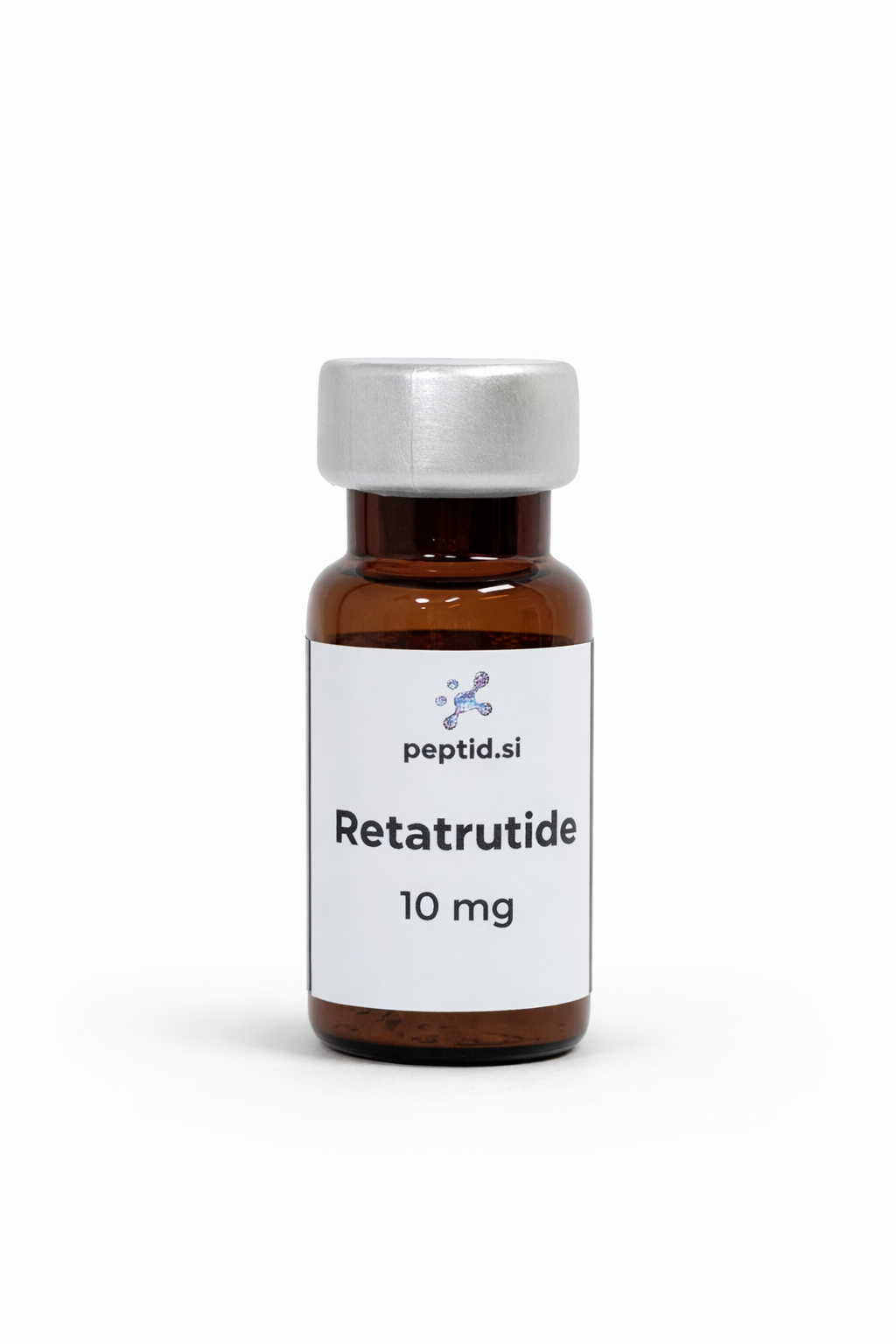
Two substances. The first is the peptide in its nominal amount, for example 10 mg of retatrutide or 10 mg of MOTS-c, and that amount is what the certificate of analysis measures. The second is mannitol, a six-carbon sugar alcohol found in plants, which the pharmaceutical industry has used for decades as an excipient in freeze-dried injectable medicines. In the vial it has a single job: to give the peptide a body. During drying the peptide is caught in mannitol's crystalline lattice, and a few milligrams of invisible film become a white, compact cake that you can see, that survives transport and that dissolves evenly. Mannitol is not an active ingredient, it does not react with the peptide, and it changes nothing in the certificate that measures the peptide.
Freeze-drying in one paragraph
Freeze-drying, or lyophilisation, is drying by freezing. The peptide is first dissolved in water, the solution is filled into vials and frozen. A vacuum is then drawn in the chamber and the ice passes directly into vapour without melting, a process called sublimation. What remains is a dry, porous structure that the trade calls a cake. The process is gentle because the peptide is never exposed to high temperature, and it is the standard for sensitive molecules, from vaccines to peptide medicines. The cake dissolves in seconds because it is as porous as a sponge, which makes a lyophilisate the ideal form for storage and for preparing a solution of known concentration in the laboratory.

The problem with small amounts: 10 milligrams is almost nothing
This is where mannitol comes in. Ten milligrams of peptide is so little material that, without a carrier, drying leaves only a thin film or a few flakes at the bottom of the vial. The film is hard to see and the vial can look empty; the flakes scatter onto the walls and the stopper in transit, and some of the material clings to the glass and never returns to the solution. During drying itself, the stream of vapour can even blow such a tiny mass out of the vial, which the industry calls blow-out, or the structure can collapse into a glassy, shrunken residue. None of this means the peptide is bad; it means it is hard to verify what you received and hard to know how much stayed on the glass. That is exactly why the 2023 review in the Journal of Pharmaceutical Sciences notes that a bulking agent is added above all to formulations with a low solid content, to increase the cake mass and prevent blow-out.
What mannitol does, and what it does not
Mannitol does four things. It gives mass: the cake is visible and can be inspected on delivery. It gives strength: mannitol's crystalline structure prevents collapse and blow-out, so the cake survives transport and stays at the bottom rather than on the stopper. It gives even dissolution: the porous cake disperses in water quickly and completely, with no flakes sticking to the glass, so all of the peptide ends up in the solution. And it is chemically neutral: mannitol is a non-reducing sugar alcohol that does not react with the peptide, which is why the literature ranks it ahead of glycine as the bulking agent of choice. What it does not do: it does not raise purity, does not change the identity or mass of the peptide, does not extend shelf life beyond the rules that apply to any dry lyophilisate, and does not protect the peptide from moisture if the vial is not sealed. In pharmaceutical manufacturing mannitol also has two known issues described in the same review: at high concentrations vials can crack during freezing, and part of the mannitol can remain as a hemihydrate; both are questions for the production process, not for the user of the reagent.

Approved medicines do the same
Mannitol in a peptide vial is not a grey-market invention; it is standard regulated pharmacy. Cetrotide (cetrorelix, 0.25 mg of peptide per vial) is, according to its EMA summary of product characteristics, a "white lyophilisate" whose only excipient in the powder is mannitol. Firmagon (degarelix, 80 or 120 mg) likewise has a single excipient in the powder, mannitol (E421). In both cases the peptide comes in an amount that would be invisible or unusable without a carrier, and in both cases the regulator requires the excipient to be declared on the packaging. We do the same: where there is mannitol, it says so on the product page and on the label.

Our mannitol batches and what the certificate says
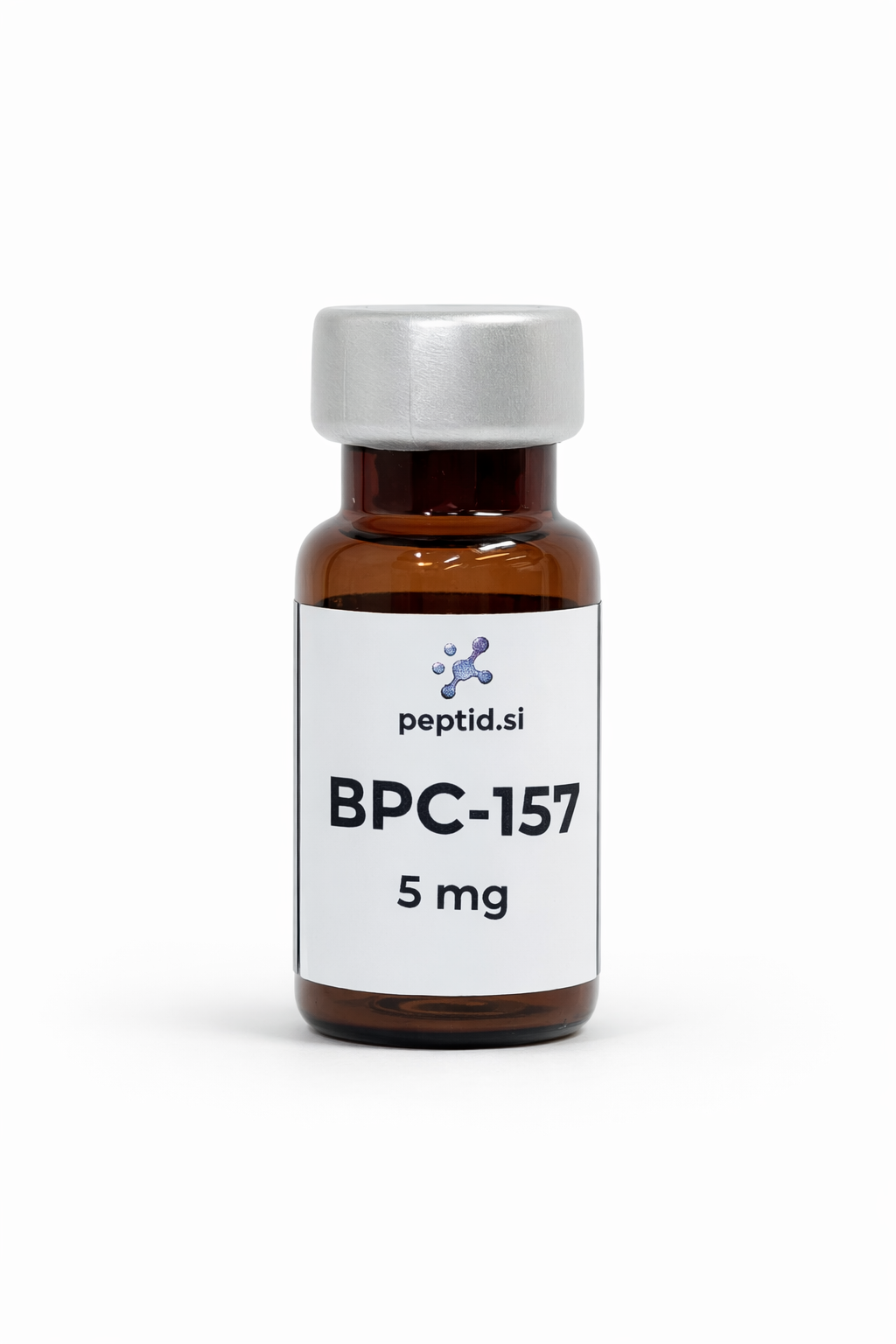
Retatrutide batch 2026349, MOTS-c batch 2026350 and BPC-157 batch 2026346 are the mannitol batches; their certificates were issued on 3 September 2026 by the Liquilabs laboratory. For retatrutide: assay 10.14 mg against a nominal 10 mg, purity above 99.8 percent by HPLC, molecular mass 4731 Da by mass spectrometry, endotoxins 0.016 EU/mg. For MOTS-c: assay 10.36 mg, purity 99.6 percent, 2174 Da, endotoxins 0.007 EU/mg. The third is BPC-157 batch 2026346, also with mannitol: assay 6.38 mg against a nominal 5 mg, purity 99.2 percent, 1418 Da, endotoxins 0.486 EU/mg; that certificate is in the COA Vault too. Two things matter when reading these. First, the assay measures the peptide, not the powder: 10.14 mg is retatrutide, and the mannitol is there in addition and is not counted. Second, HPLC purity refers to the peptide peak and its impurities; mannitol does not absorb light at the wavelength HPLC uses to measure peptides, so it does not appear in the chromatogram and does not "dilute" the purity figure. Mass spectrometry confirms the identity of the peptide regardless of the carrier.

What changes when preparing a solution for in vitro work: one sentence
More powder, the same amount of peptide. The concentration of a solution is always calculated from the nominal amount of peptide on the label, not from the mass of the cake; 10 mg of peptide in 2 ml of solvent gives 5 mg/ml no matter how much mannitol is present. Mannitol dissolves completely in water, so the solution must be clear; cloudiness, particles or colour are a warning sign, not a property of mannitol. Storage stays the same as for any lyophilisate: dry powder in a sealed vial in the refrigerator at 2 to 8 °C for months, and the solution according to the rules in our storage guide.
What to check on delivery
The cake should be white to slightly off-white, compact and at the bottom of the vial; it may be cracked, which is normal, but it must not be glassy, collapsed or shrunken into a small bead. Powder on the stopper means part of the cake broke off in transit, which is not a defect, but tap the vial so it settles before opening. Dampness, stickiness or a yellow or brown tint are warning signs. The batch number on the label must match the certificate in the COA Vault. And as always: all products on peptid.si are for research use only, are not approved for use in humans or animals, and we do not answer questions about use.

References / Links
- Thakral S, Sonje J, Munjal B, Bhatnagar B, Suryanarayanan R (2023). Mannitol as an Excipient for Lyophilized Injectable Formulations. Journal of Pharmaceutical Sciences, 112(1): 19 do 35. PubMed
- Tchessalov S, Maglio V, Kazarin P, Alexeenko A, et al. (2023). Practical Advice on Scientific Design of Freeze-Drying Process: 2023 Update. Pharmaceutical Research. PubMed
- Evropska agencija za zdravila (EMA) (2024). Cetrotide 0,25 mg, prašek in vehikel za raztopino, povzetek glavnih značilnosti zdravila (prašek: manitol; bel liofilizat). EMA, informacije o zdravilu. Web
- Evropska agencija za zdravila (EMA) (2024). Firmagon (degareliks), prašek in vehikel za raztopino, povzetek glavnih značilnosti zdravila (prašek: manitol E421). EMA, informacije o zdravilu. Web
- Liquilabs s.r.o. za Particle Peptides (2026). Certifikat analize, Retatrutide 10 mg, serija 2026349 (3. 9. 2026): vsebnost 10,14 mg, čistost > 99,8 % (HPLC), 4731 Da (MS), endotoksini 0,016 EU/mg. peptid.si COA Vault. Web
- Liquilabs s.r.o. za Particle Peptides (2026). Certifikat analize, MOTS-c 10 mg, serija 2026350 (3. 9. 2026): vsebnost 10,36 mg, čistost 99,6 % (HPLC), 2174 Da (MS), endotoksini 0,007 EU/mg. peptid.si COA Vault. Web
- Liquilabs s.r.o. za Particle Peptides (2026). Certifikat analize, BPC-157 5 mg, serija 2026346 (3. 9. 2026): vsebnost 6,38 mg, čistost 99,2 % (HPLC), 1418 Da (MS), endotoksini 0,486 EU/mg. peptid.si COA Vault. Web