What BPC-157 is and why verification matters here
BPC-157 (Body Protection Compound-157) is a synthetic pentadecapeptide, a chain of 15 amino acids with the sequence GEPPPGKPADDAGLV and a molecular mass of about 1419 Da. The sequence derives from a protein described in human gastric juice, but the molecule in the vial is entirely laboratory-synthesised. The literature is almost entirely preclinical: a 2025 review summarises rodent and cell-culture studies and stresses that clinical data in humans are practically absent and that the compound is not approved as a medicine. Precisely this popularity, combined with the absence of regulation, creates a market with counterfeits, mislabelled content and COAs not tied to any batch. Verification is not a formality; it is the only way to know what is in the vial.
Step 1: before buying, open the COA for the batch on sale
A serious supplier publishes the COA openly and before purchase. On peptid.si the certificates for all batches are in the COA Vault, where the current BPC-157 batch is listed. Open the document and check five things: the compound name (BPC-157) with sequence or CAS number, the batch number, the date of analysis, the purity method (HPLC) with its result, and the identity method (mass spectrometry) with the measured mass. If any of these is missing, the COA is incomplete. A practice article on certificates of analysis explains that a document not tied to a specific batch is worthless in practice, because quality varies between batches even from the same manufacturer.
Step 2: read the HPLC chromatogram
HPLC separates the components of a sample; the main peak belongs to BPC-157, the smaller peaks are impurities. Purity in percent states what share of the peak area belongs to the main peptide; on peptid.si the benchmark is at least 98%. When reading, look at three things: whether the main peak is single and sharp, whether impurities are listed individually, and whether the method is described (column, gradient, detection wavelength). A chromatogram without a method description or without a scale is hard to verify. The methods literature on HPLC analysis of peptides is a good reference for what a report must contain so that another laboratory could repeat it.
Step 3: compare the measured mass with the theoretical one
Mass spectrometry confirms that the main peak really is BPC-157. The COA states the measured mass or the mass-to-charge ratio of the main ion; the theoretical average mass of BPC-157 is about 1419.5 Da. A deviation of a few tenths is normal and instrument-dependent; a deviation of tens or hundreds of daltons means a different molecule, a salt form, or an error. Analytical studies show that liquid chromatography coupled with high-resolution mass spectrometry detects impurities below 0.1%, which HPLC with UV detection cannot do alone. A COA without mass spectrometry therefore answers only half the question: it says how pure, not what.
Step 4: on delivery, check the label, batch number and appearance
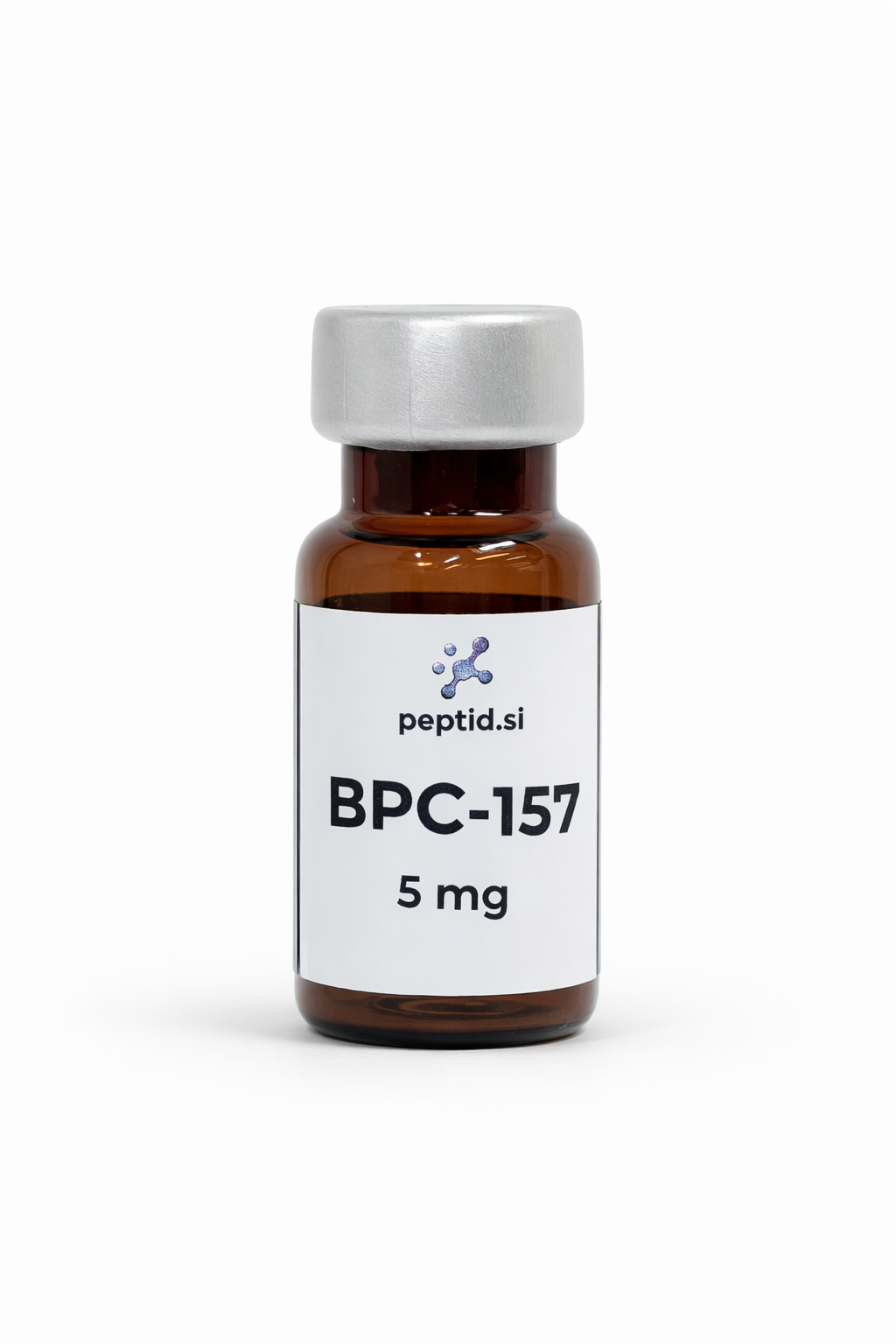
When the vial arrives, compare the batch number on the label with the COA you reviewed before buying; they must match. Inspect the lyophilisate: BPC-157 is a white to slightly yellowish powder or a compact cake at the bottom of the vial. Powder scattered on the walls can result from shaking in transit and is not a defect; discolouration, moisture, stickiness or visible particles are warning signs. The stopper must be intact and the flip-off cap present. Lyophilised BPC-157 does not need a cold chain during a multi-day delivery; after arrival store it refrigerated at 2 to 8 °C, protected from light. We described the visual inspection in more detail in a separate article.
Step 5: when a result is a warning sign
Decline the purchase or claim the shipment when any of the following applies: the COA is not tied to a batch or has no date; the COA shows HPLC only, without mass spectrometry; the stated purity is 99.9% with no chromatogram; the measured mass does not match BPC-157; the batch number on the vial differs from the COA; the supplier gives no company details; the product description promises effects in people or offers dosing instructions. A 2024 study of peptide products bought online found that anonymous sellers delivered samples with purity between 7.7% and 14.4% against a declared 99%. A low price was the frequent common denominator.
BPC-157 in Slovenia: legal framework and research use
In April 2026 JAZMP published a warning about injectable peptides sold online as products for people, stressing that they hold no marketing authorisation and that their quality, safety and efficacy are unverified. BPC-157 is not an approved medicine in Slovenia or the EU; as a research reagent it is intended for in vitro experiments and model studies. On peptid.si, 5 mg of lyophilised BPC-157 costs 38.09 EUR with a public batch COA and dispatch from Slovenia, free above 150 EUR. We give no instructions for use in humans and do not answer such questions; every buyer confirms the research purpose at checkout. Anyone looking for a product for pain relief or healing should see a physician, not an online shop.
References / Links
- Józwiak M, Bauer M, Kamysz W, et al. (2025). Multifunctionality and Possible Medical Application of the BPC 157 Peptide: Literature and Patent Review. Pharmaceuticals. PubMed
- Gwyer D, Wragg NM, Wilson SL (2019). Gastric pentadecapeptide body protection compound BPC 157 and its role in accelerating musculoskeletal soft tissue healing. Cell and Tissue Research. PubMed
- Zolner WJ (2012). Why do I need a Certificate of Analysis? International Journal of Pharmaceutical Compounding. PubMed
- Mant CT, Chen Y, Yan Z, Popa TV, et al. (2007). HPLC analysis and purification of peptides. Methods in Molecular Biology. PubMed
- Zeng K, Geerlof-Vidavisky I, Gucinski A, et al. (2015). Liquid Chromatography-High Resolution Mass Spectrometry for Peptide Drug Quality Control. The AAPS Journal. PubMed
- Ashraf AR, Mackey TK, Vida RG, et al. (2024). Multifactor Quality and Safety Analysis of Semaglutide Products Sold by Online Sellers Without a Prescription. Journal of Medical Internet Research. PubMed
- JAZMP (Agency for Medicinal Products and Medical Devices of the Republic of Slovenia) (2026). Opozorilo glede uporabe peptidov za injiciranje (Warning on the use of injectable peptides). JAZMP, official notice. Web