Natural presence in the body
GHK-Cu circulates naturally in blood, saliva, and urine. Plasma concentration drops with age: around 200 ng/ml at age 20, around 80 ng/ml after 60. That drop is one of the reasons GHK-Cu interests longevity researchers. Molecular weight: 403.9 Da. The copper ion is essential for biological activity.
Skin and aging research
Preclinical studies report stimulation of collagen and elastin, antioxidant activity in skin cells, possible hair growth stimulation, and reduced expression of collagen-degrading genes (MMPs). This is why the peptide is so popular in the cosmetic industry, even though the research form differs from cosmetic formulations.
Gene expression
A 2010 study (Pickart et al.) identified that GHK-Cu modulates expression of over 4,000 genes, approximately 6% of the human genome. Including genes for DNA repair, antioxidant defense, and immune regulation. Findings are preclinical and require further validation.
GHK-Cu quality
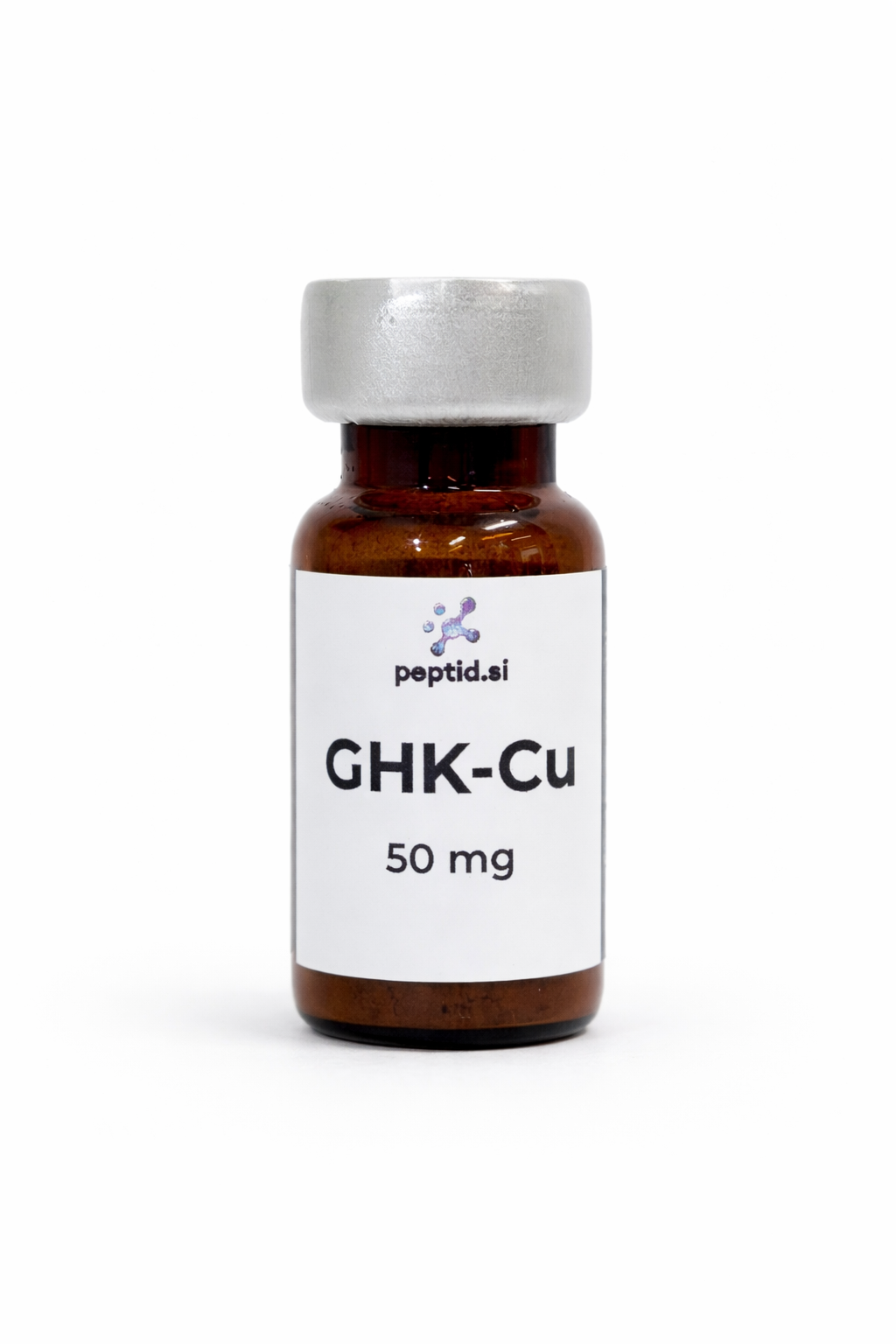
Copper peptide requires special attention: the ratio between peptide and copper ion must be correct, and without copper the peptide is non-functional. Peptid.si offers GHK-Cu (50mg) at ≥99% purity, confirmed by independent analysis.
References / Links
- Pickart L, Vasquez-Soltero JM, Margolina A (2018). Regenerative and Protective Actions of the GHK-Cu Peptide in the Light of the New Gene Data. Int J Mol Sci. MDPI
- Pickart L, Vasquez-Soltero JM, Margolina A (2015). GHK Peptide as a Natural Modulator of Multiple Cellular Pathways in Skin Regeneration. Biomed Res Int. Wiley
- Pickart L, Vasquez-Soltero JM, Margolina A (2014). GHK and DNA: Resetting the Human Genome to Health. Biomed Res Int. Wiley
- Dou Y, Lee A, Zhu L, Morton J, Ladiges W (2020). The potential of GHK as an anti-aging peptide. Aging Pathobiol Ther. PubMed
- Min JH, Sarlus H, Harris RA (2024). Glycyl-l-histidyl-l-lysine prevents copper- and zinc-induced protein aggregation and central nervous system cell death in vitro. Metallomics. Oxford Academic