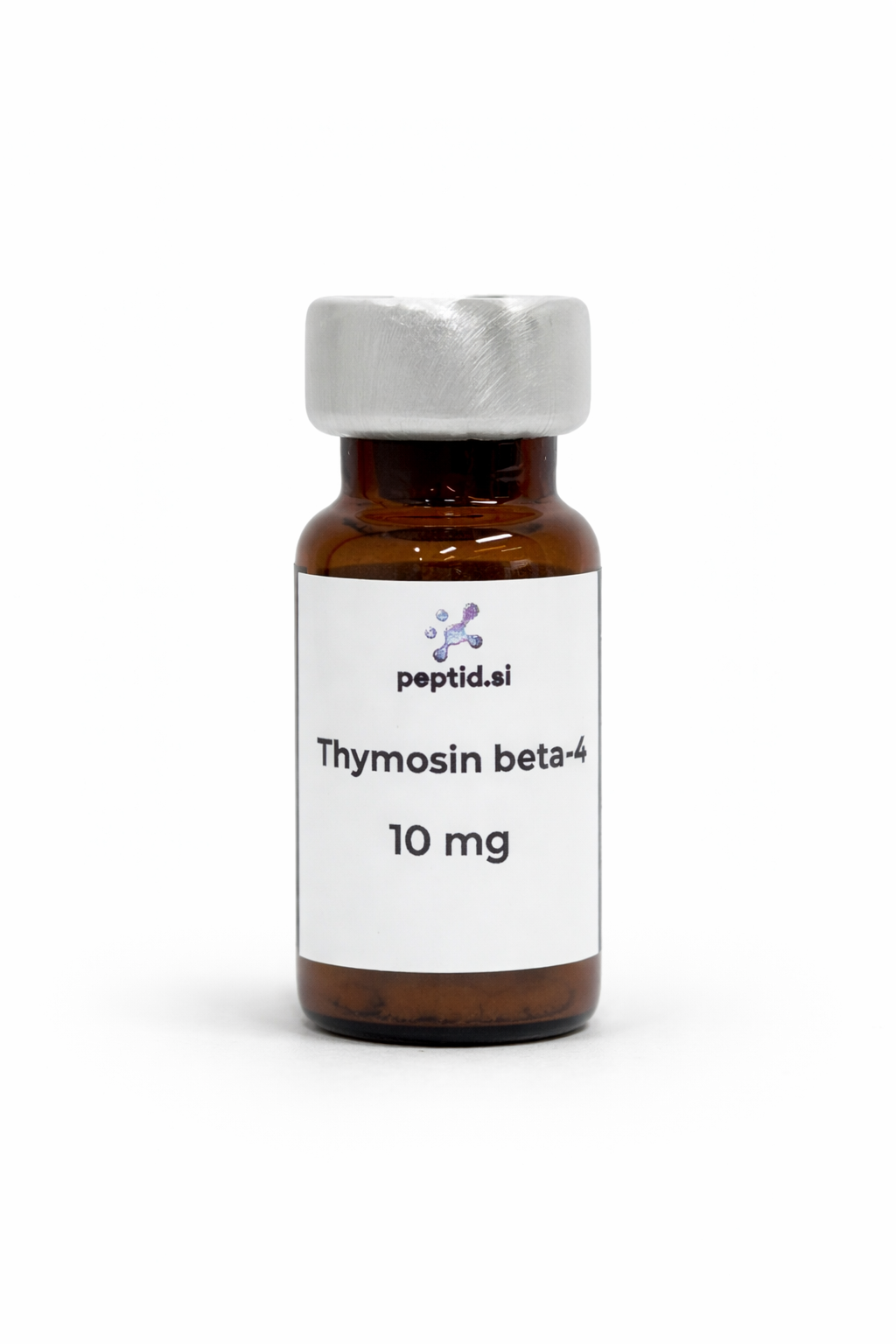
What is Thymosin Beta-4?
Thymosin Beta-4 was first identified in the thymus gland. Its primary role is to bind actin, the cellular skeleton protein. By regulating actin, it influences cell motility, which underpins wound healing and tissue regeneration. Molecular weight: 4,963 Da. Made by solid-phase peptide synthesis (SPPS).
Preclinical research
Wound healing: accelerated closure, reduced scarring, enhanced cell migration. Cardiovascular: reduced infarct size in animal models, new blood vessel formation in cardiac muscle. Anti-inflammatory: reduced inflammatory cytokines. Neurological: neurite outgrowth promotion, potential CNS protective effects.
TB-500 vs. BPC-157
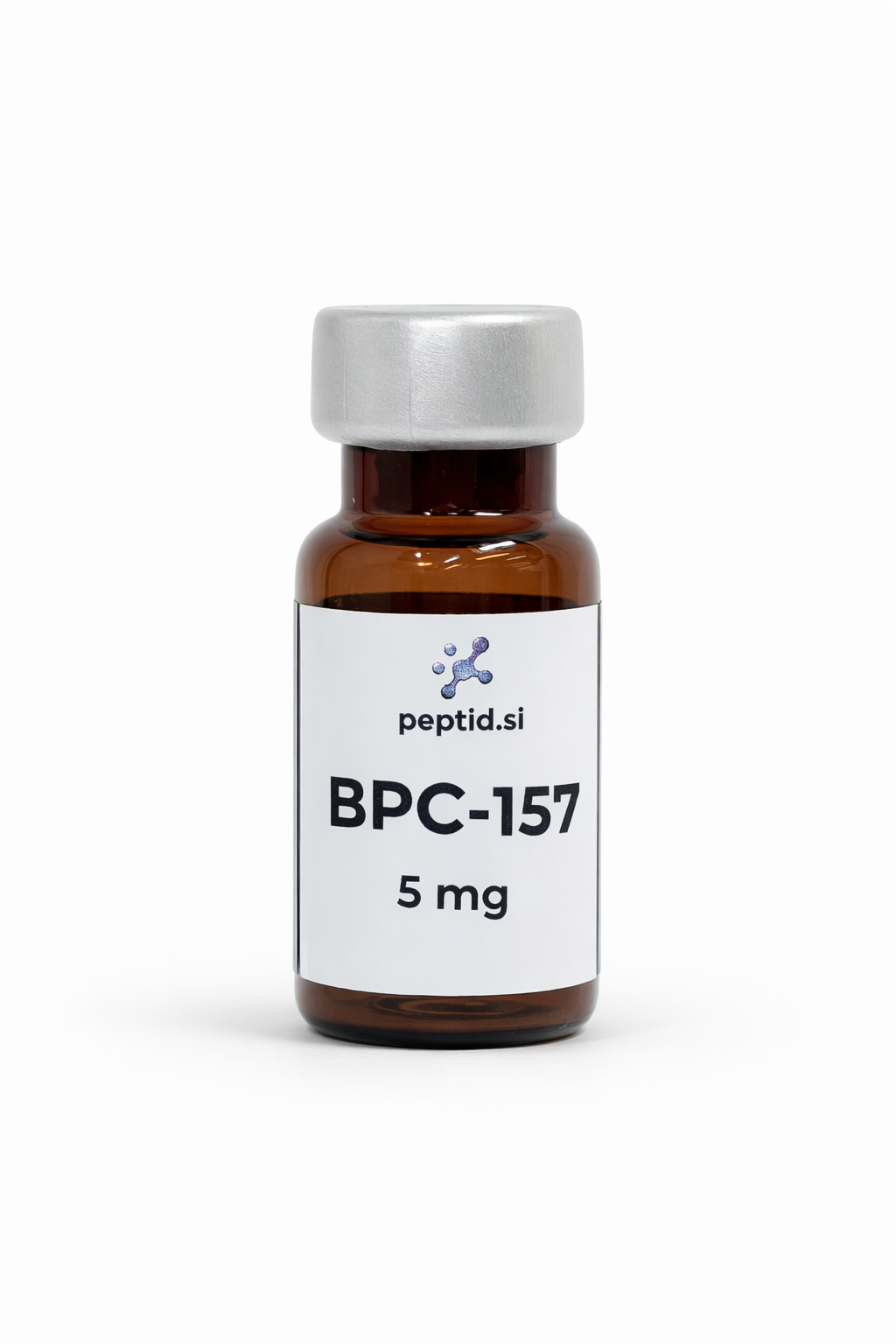
The two are often discussed together because they work through different but complementary pathways. BPC-157 acts mainly through nitric oxide and growth factors, while TB-500 acts through actin regulation and cell migration. Both are available at Peptid.si with independently verified purity.
Limitations of evidence
Most data comes from animal studies and in vitro models. Human clinical trials are scarce. The long-term safety profile in humans is unknown. TB-500 is not approved for medical use by any regulatory body and remains a research peptide (RUO).
References / Links
- Malinda KM, Sidhu GS, Mani H, Banaudha K, et al. (1999). Thymosin beta4 accelerates wound healing. J Invest Dermatol. PubMed
- Kleinman HK, Sosne G (2016). Thymosin β4 Promotes Dermal Healing. Vitam Horm. ScienceDirect
- Bock-Marquette I, Saxena A, White MD, Dimaio JM, Srivastava D (2004). Thymosin beta4 activates integrin-linked kinase and promotes cardiac cell migration, survival and cardiac repair. Nature. Nature
- Smart N, Bollini S, Dubé KN, Vieira JM, et al. (2012). Myocardial Regeneration: Expanding the Repertoire of Thymosin β4 in the Ischaemic Heart. Ann N Y Acad Sci. PubMed
- Wang F, He Y, Yao N, Ruan L, Tian Z (2022). Thymosin β4 Protects against Cardiac Damage and Subsequent Cardiac Fibrosis in Mice with Myocardial Infarction. Oxid Med Cell Longev. Wiley