The triple agonism mechanism
Retatrutide was designed as a single molecule that activates all three key metabolic receptors at once. It is most potent at GIPR (functional potency EC50 = 0.064 nM), with high activity at GLP-1R (0.775 nM), and moderate activity at GCGR (5.79 nM). GLP-1R and GIPR signaling promote glucose-dependent insulin secretion and reduce appetite, while GCGR activation increases hepatic fat oxidation and energy expenditure. Combining all three pathways yields greater weight-loss potential than single- or dual-pathway agonists.
Structure and pharmacokinetics
The molecule consists of 39 residues with key modifications: 2-aminoisobutyric acid (Aib) for protease resistance, 2-methylleucine for improved receptor selectivity, and a C20 fatty-diacid side chain that enables reversible albumin binding. This lipid modification extends the elimination half-life to approximately 6 to 8 days, supporting once-weekly subcutaneous dosing. Cryo-EM structural studies have revealed how a single peptide can productively engage three structurally distinct receptors through conserved and receptor-specific contacts.
Phase 2 clinical research: weight loss
In the randomized phase 2 trial NCT04881760 (Jastreboff et al., NEJM 2023), 338 adults with obesity received retatrutide or placebo. At 48 weeks, mean weight change in the 12 mg group was -24.2% (vs. -2.1% for placebo), representing an absolute loss of approximately 26 kg. At the highest dose, 83% of participants achieved ≥15% weight loss and more than 40% achieved ≥20%. Importantly, body weight had not plateaued by week 48, suggesting larger effects may be possible with longer dosing.
Phase 3 clinical trials (TRIUMPH program)
In December 2025, Eli Lilly published phase 3 results from TRIUMPH-4 in adults with obesity and knee osteoarthritis. After 68 weeks, retatrutide 12 mg produced mean weight loss of -28.7% (-26.6% placebo-adjusted), along with significant reductions in knee pain. In March 2026, topline phase 3 results in type 2 diabetes showed retatrutide lowered HbA1c by up to approximately 2 percentage points. Eli Lilly projects that regulatory submission to the FDA and EMA could occur in late 2026 or early 2027, contingent on positive TRIUMPH program outcomes.
Safety profile
In clinical trials, the most common adverse effects were gastrointestinal: nausea, vomiting, diarrhea, constipation. These were dose-related and mostly mild to moderate, with gradual titration reducing their frequency. A modest dose-dependent increase in heart rate (5-10 bpm) peaked around week 24 and partially attenuated thereafter. Serious events such as pancreatitis (~0.4%) and gallbladder disease were rare and consistent with the broader incretin therapeutic class. TRIUMPH-OUTCOMES (NCT06383390) is currently evaluating cardiovascular outcomes in high-risk obesity patients.
Research peptide status
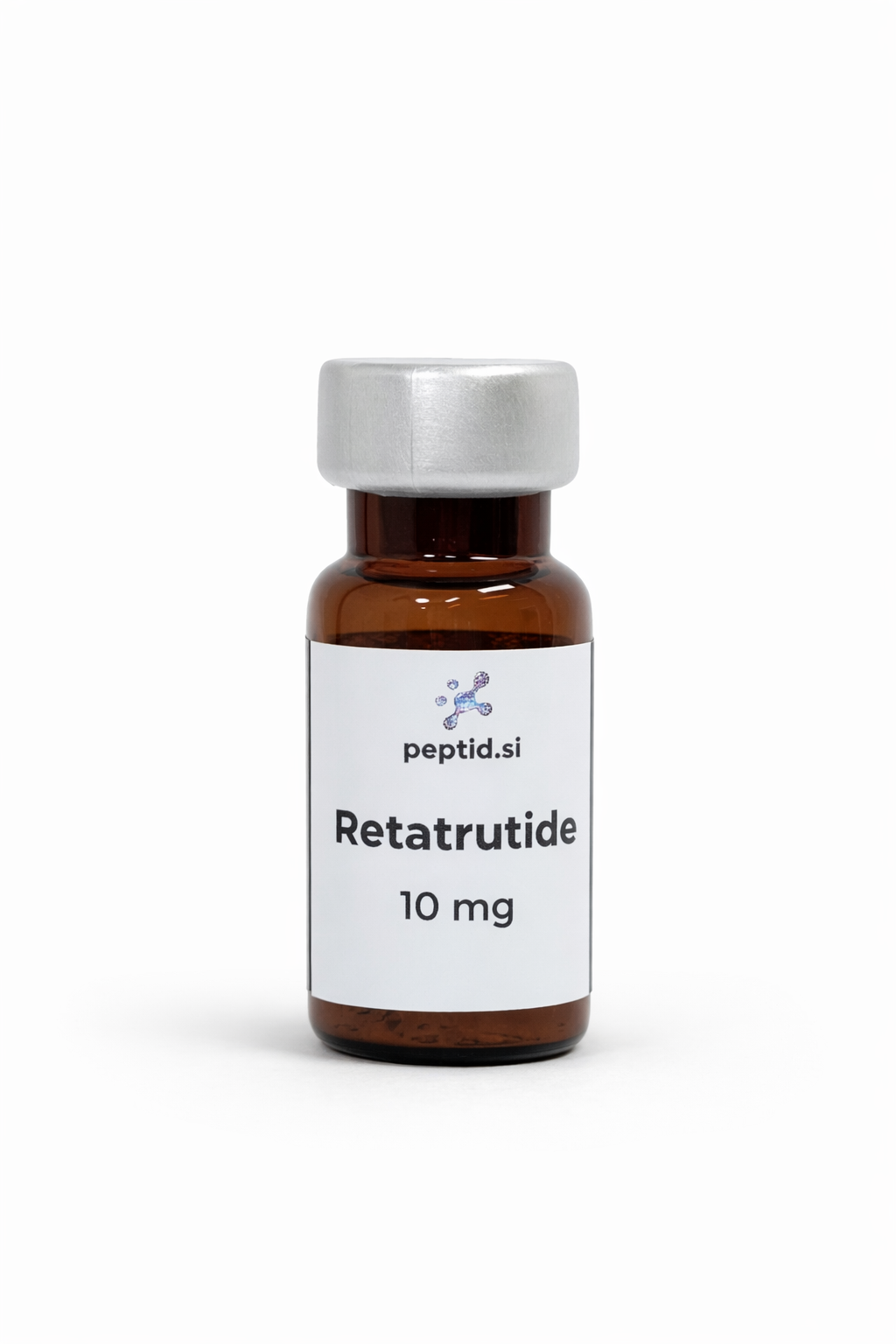
Retatrutide is not currently approved for medical use by the FDA, EMA, or any other regulatory body, and remains a research peptide (RUO). All clinical data described above derive from Eli Lilly's clinical development programs using investigational formulations under strict clinical protocols. Peptid.si supplies Retatrutide exclusively for research and development purposes, with laboratory-verified ≥99% purity via independent HPLC and MS analysis.
References / Links
- Jastreboff AM, Kaplan LM, Frías JP, Wu Q, et al. (2023). Triple–Hormone-Receptor Agonist Retatrutide for Obesity - A Phase 2 Trial. N Engl J Med. PubMed
- Coskun T, Urva S, Roell WC, Qu H, et al. (2022). LY3437943, a novel triple glucagon, GIP, and GLP-1 receptor agonist for glycemic control and weight loss: from discovery to clinical proof of concept. Cell Metab. ScienceDirect
- Sanyal AJ, Kaplan LM, Frias JP, Brouwers B, et al. (2024). Triple hormone receptor agonist retatrutide for metabolic dysfunction-associated steatotic liver disease: a randomized phase 2a trial. Nat Med. Nature
- Sun Y, Wang F, Liu Q, Liu Y, et al. (2024). Structural insights into the triple agonism at GLP-1R, GIPR and GCGR manifested by retatrutide. Cell Res. Nature
- Urva S, Coskun T, Loh MT, Du Y, et al. (2022). LY3437943, a novel triple GIP, GLP-1, and glucagon receptor agonist in people with type 2 diabetes: a phase 1b, multicentre, double-blind, placebo-controlled, randomised, multiple-ascending dose trial. Lancet. PubMed